What Is Learning Intelligence? (And Why School Leaders Are Quietly Upgrading)
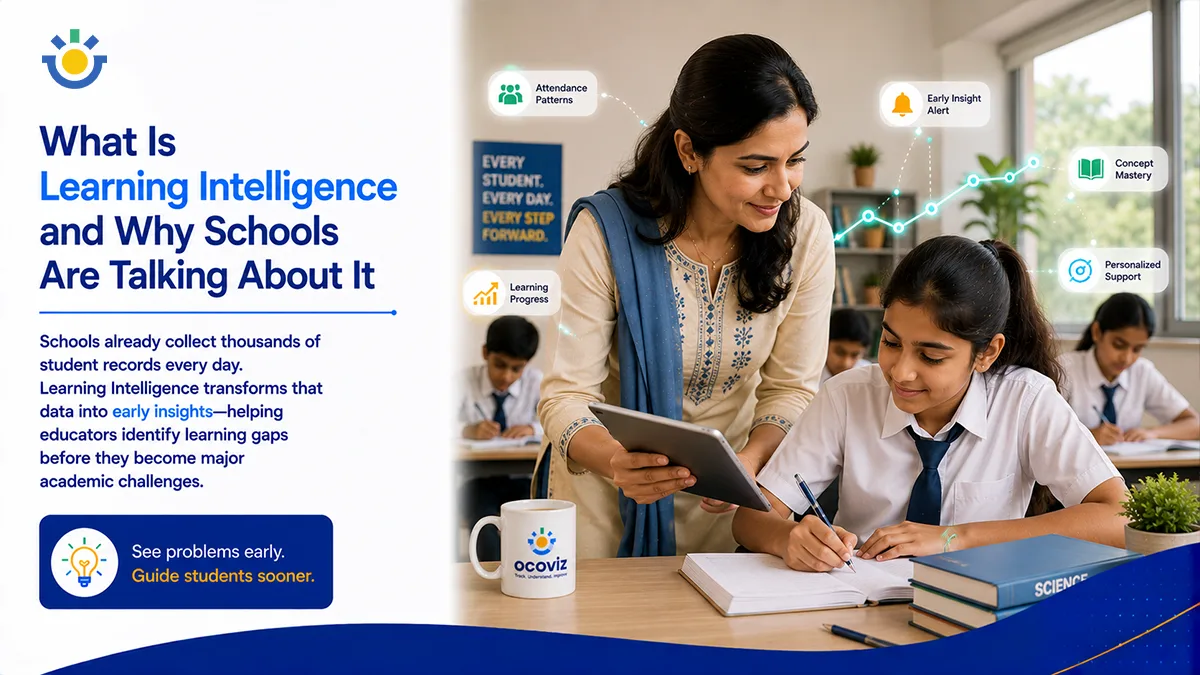
Key Takeaways
- Learning Intelligence goes beyond traditional administrative software by turning passive school data into active, predictive guidance.
- Traditional ERPs archive past performance, whereas a Learning Intelligence Operating System (LIOS) predicts learning breakdowns weeks in advance.
- Reduces administrative lag, automating mark aggregation, compliance reporting, and attendance trend analysis.
- Provides teachers and administrators with actionable risk alerts rather than static, unorganized spreadsheets.
- Creates a unified ecosystem that connects teachers, parents, and school leaders around real-time student growth.
Walk into any school principal’s office on a Friday afternoon. You’ll find desks buried under stacks of registers, open spreadsheets, and printed test results. The data is all there. Millions of data points collected every single month.
Yet when a parent sits down for a progress review, the conversation almost always looks backward: "Here is where your child fell behind last month."
It’s like driving a car while staring entirely into the rearview mirror. You see every pothole you hit, but you can’t spot the turn coming up ahead.
For two decades, schools bought software built to archive records—digital filing cabinets designed for accountants, not educators. But recording the past doesn't change the future. That is why progressive school leaders are shifting away from static record-keeping toward something fundamentally different: Learning Intelligence. It isn't another software tab to manage; it's a way to make school data speak up before it's too late.
The Direct Answer:
Learning Intelligence is an advanced educational framework that uses continuous background analytics to transform routine school data into proactive, actionable insights. Unlike traditional administrative software, a Learning Intelligence system identifies conceptual learning gaps, attendance anomalies, and administrative friction before they impact student outcomes.
The Quick-Scan Parameter:
- Core Purpose: Shift school management from reactive record-archiving to proactive risk prediction.
- Early Intervention: Surfaces academic risk signals 2 to 4 weeks prior to major examinations.
- Workflow Impact: Eliminates manual data copying across marksheets, registers, and report cards.
- Key Stakeholders: School leaders, class teachers, and parents aligned on a single data layer.
Why Are Traditional School ERPs Falling Short?
Most traditional ERPs were built for finance, operations, and compliance. They excel at telling you who paid tuition on time or which room holds the chemistry equipment.
When it comes to actual learning, however, traditional software acts like a silent vault. It stores marks after the test is graded, records absences after the week is over, and generates report cards after the term ends.
TRADITIONAL SCHOOL ERP: Data Input > Static Storage > End-of-Term Autopsy
LEARNING INTELLIGENCE (LIOS): Live Signals > Automated Synthesis > Early Action
By the time an administrative report flags that a student is struggling, weeks of crucial learning have already been lost. Educators don't need another place to store numbers; they need a system that highlights what those numbers actually mean.
How Does a Learning Intelligence Operating System Work?
Instead of operating as isolated spreadsheets, a Learning Intelligence Operating System connects daily touchpoints—attendance, short quiz results, homework timing, and teacher observations—into a cohesive intelligence layer.
How Learning Intelligence Works (The 3 Steps)
| What It Is | What It Does | Simple Example |
| 1. Telemetry (Data Collection) | Automatically collects daily classroom info without adding extra work for teachers. | Tracks attendance, daily homework, and quick quiz scores automatically. |
| 2. Diagnostic (Smart Analysis) | Connects the dots to spot learning struggles before big exams happen. | Realizes a student missed two classes and scored low on a math quiz. |
| 3. Action (Proactive Alerts) | Sends clear, helpful warnings directly to teachers and parents. | Alerts the teacher to offer help and updates the parent on what to practice at home. |
When Ocoviz operates as an intelligence layer, it works quietly in the background. If a student's performance dips on two consecutive quizzes while their attendance drops by 10%, the system connects those dots automatically. It flags the issue on the teacher's morning dashboard before the student falls through the cracks.
"The goal of modern school technology isn't to generate more charts—it's to help human educators make faster, wiser decisions every day." — State of School Intelligence in India Report
How Does Learning Intelligence Reduce Teacher Burnout?
A major reason school leaders are talking about Learning Intelligence is teacher retention. Educators spend nearly half their working hours on administrative upkeep—copying marks between registers, building progress reports, and drafting parent emails.
When software automates mark aggregation and report generation, teachers regain hours of lost time. Instead of spending Sunday nights copying grades into ledgers, they can spend that energy preparing engaging lessons and mentoring students who need extra help.
For a deeper dive into how this helps classroom practice, explore our guide on how learning intelligence supports teachers without replacing them.
Practical Takeaways for School Leaders
- Audit administrative overhead: Identify how many hours your teaching staff spends manually copying marks across registers and software.
- Transition from autopsies to alerts: Shift staff meeting agendas from reviewing historical exam failures to discussing proactive intervention lists.
- Unify school communications: Ensure parents receive continuous, constructive progress updates rather than end-of-term surprises.
- Streamline tool clutter: Consolidate fragmented apps into a single, centralized dashboard to prevent staff digital fatigue.
Conclusion
The future of school management isn't about collecting more data—it's about using the data you already have to care for students more effectively.
By upgrading from static archives to Learning Intelligence, school leaders can eliminate administrative drag, protect their teachers from burnout, and ensure that no student's struggle goes unnoticed.
The Comparison Block: Traditional ERP vs. Learning Intelligence
| Feature / Capability | Traditional School ERP | Learning Intelligence Operating System |
| Primary Design Goal | Operational & financial record-keeping | Predictive learning insights & workflow automation |
| Data Utilization | Passive storage (historical records) | Active synthesis (real-time risk flags) |
| Teacher Experience | Manual data entry across forms | Single-entry logging with automated reports |
| Intervention Timing | Post-exam (after failure occurs) | Pre-exam (2 to 4 weeks prior) |
Frequently Asked Questions
How does Learning Intelligence differ from a standard school ERP software?
Why are school principals moving away from traditional management software?
How can a learning analytics platform help prevent student dropouts and failure?
Does implementing Learning Intelligence require replacing our school's existing software?
How much time can teachers save by switching to an automated learning intelligence system?
How does Learning Intelligence improve parent-school communication?
Discover the Power of Learning Intelligence
See how Ocoviz eliminates administrative drag, supports your teaching staff, and flags student learning gaps weeks before exam day.
Schedule a School Leadership Demo